

Author’s Note: This piece continues my ongoing series on assimilation, narrative time, and consequence in Mexican American storytelling. Each essay moves one layer deeper. If you are new here, you may want to read the earlier installments first.
The levels matter because the costs compound.
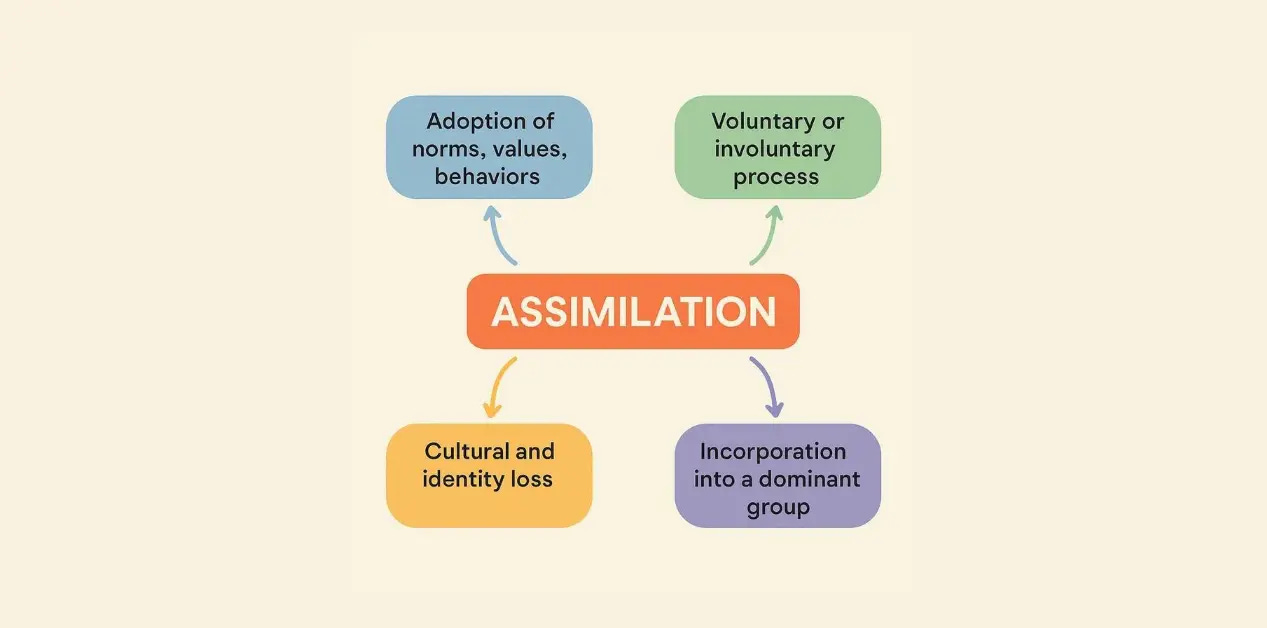
Assimilation is often treated as a single moment.
A name shortened. An accent softened. Spanish reserved for the house. On the page, it looks decisive. A turning point. A betrayal or a success.
In life, it does not move that cleanly. Assimilation operates at different levels.
When fiction collapses them into one visible shift, the story flattens.
Surface Change Is Not Structural Change
Many Latino novels stage assimilation through visible adjustment.
In The House on Mango Street, Esperanza wants a house of her own. She wants distance from the block, from shame, from constraint. The desire is clear. The aspiration is legible.
But the book ends before we see what access costs her or what it requires her to absorb.
In I Am Not Your Perfect Mexican Daughter, Julia names her anger. She names the pressure in her home. She names the weight of expectation. The recognition matters.
But the story closes as she prepares to leave.
We see articulation, but not maintenance.
Does the workplace treat her as an equal once she enters it? Do her mistakes carry the same weight as her peers’? Does her education insulate her from suspicion?
Surface assimilation, language, education, ambition, is the easiest layer to dramatize. Structural assimilation, how power rearranges around her, is harder. Many stories stop before that layer becomes visible.
Psychological Assimilation Is Not Institutional Acceptance
Interior tension is common in Latino literature. Shame. Code-switching. The exhaustion of translation.
In American Dirt, Lydia survives by learning how to move invisibly, how to anticipate threat. The psychological pressure is constant. What the novel makes clear is that interior change does not erase institutional hostility. Border Patrol does not soften because she is adaptable. Violence does not disappear because she is strategic.
Internal strength does not guarantee institutional safety.
In other novels, the psychological struggle is vivid, but the external world stabilizes too easily. The character feels conflicted but moves freely through elite institutions without sustained resistance. That is a narrative choice.
Assimilation that changes feeling but not access, or access but not scrutiny, is incomplete.
First Generation Is Not Second Generation
Sandra Cisneros writes first-generation pressure differently than Erika L. Sánchez writes second-generation frustration.
The parents in I Am Not Your Perfect Mexican Daughter operate from survival logic. Silence protects. Reputation protects. Compliance protects.
Julia inherits that logic but lives in a different institutional reality. She has more mobility. She also has more room to question.
Those are not the same pressures.
By the time we reach third-generation narratives, Spanish may already be fractured. The tension shifts again, from survival to legitimacy. From safety to authenticity.
Literature often compresses these generational differences into one arc: struggle, recognition, uplift.
In life, each generation absorbs a different cost.
Leaving by Choice Is Not the Same as Being Forced Out
In Vida, Lyn leaves Boyle Heights because she wants expansion. Emma leaves because her queerness makes staying unsafe. Both gain access outside the neighborhood.
But the community reads them differently.
Lyn’s ambition is indulgent. Emma’s distance is betrayal. Neither escapes scrutiny.
Assimilation reshapes loyalty regardless of motive. Choice alters tone. It does not erase consequence.
What Stories Avoid
When assimilation is treated as singular, escalation disappears.
The accent fades, but we never see the job interview. A college acceptance appears, but not the workplace ceiling. Then the character returns home, but not the accusation of “whitina,” “malinchista,” or “pocha.” The story has chosen comfort.
Writers often give Latino characters recognition. They are less often allowed power. And when the narrative grants them power, it rarely tracks the cost to others or the cost of maintaining that power.
Assimilation has levels.
Surface change.
Psychological calibration.
Institutional negotiation.
Generational inheritance.
When fiction exposes only one level, it trains readers to believe that is the whole story.
It is not.
Next, I want to examine what happens when representation itself smooths these levels into safer, more marketable patterns.
← Previous Essay | Next Essay →
Subscribing simply means new work arrives by email, with access to publication archives. No ads. No noise. Just the writing, as it unfolds.
Thank you for reading.
Share your thoughts below.
If this essay spoke to you, share it with someone who might want to walk this story with you.
If you enjoyed this piece, check out some of my other essays:

Beneath the Weight of Water | Serialized Literary Fiction

Lucia Perez lives in a house where anger is excused, silence is expected, and survival means staying small. She keeps her head down, studies hard, and holds on to one fragile hope: that education might be her way out.


