

Author’s Note: This piece explains how I read and why I talk about books the way I do. The Shelve Test is not a system meant to impress anyone. It is simply how I decide what stays with me.

Reading for joy does not require credentials, rubrics, or permission.
I am just a reader who wants books to feel alive, not like homework. This piece is about reading levels, internet megaphones, and why my only metric is whether a book earns its place on the shelf.
Lately, I’ve been watching videos where people explain the correct way to critique books. I admire the confidence.
Most readers do not have the training to critique literature, myself included. I may have a PhD, but it is in public health. I can break down disease, not Shakespeare.
Then there are book reviews, a whole different circus.
And to understand that circus, we need to look at reading levels.
Half of adults in the United States read below a sixth-grade level. The rest land anywhere from sixth grade to college level.
I realized something was changing when women in my book groups, all with bachelor’s degrees, started requesting shorter books and “no big words.” That was the moment I knew the reading community had shifted.
And this shift shows up everywhere in reviews.
Many people reviewing books are struggling with the text itself. Not with symbolism or character arcs, but with basic comprehension. Readers are missing key pieces, get frustrated, and blame the author. Then the internet hands them a megaphone.
If you want proof, scroll through the reviews on Amazon or Goodreads for classic novels. You will find one-star ratings for timeless art because the vocabulary was “too hard” or the sentences “too long.”
My personal favorite was a one-star review because the print was too light.
Did the reviewer read the book?
If you are used to short sentences, constant stimulation, and captions doing half the heavy lifting, you will struggle with nuance. That doesn’t make the book pretentious. It means your reading muscles need a warm-up.
Now for the important question.
Should reading for pleasure feel like homework?
No.
Reading for pleasure does not require charts, color coding, or a graduate seminar.
When I read, I want to feel alive. I want to step into a world that isn’t mine. I want to read at night with two dogs snoring near my feet.
That is the entire goal.
Do I critique books? No.
Do I review them? I tried.
I wanted to be fair to the author, but I also wanted to share my reading experience honestly. I realized that wasn’t really possible.
So I keep it simple.
Welcome to The Shelve Test
Every book either earns a spot or gets sent on its merry way.
The Shelve Test
5 means cherished.
4 means loved.
3 means enjoyed.
2 means for someone else.
When I share my thoughts on a book, I talk about what I enjoyed and what I did not. That is it.
No elaborate scoring systems.
No dissertations.
Just honesty.
And since the house is quiet and the dogs do not talk back, I am sending these thoughts into the void.
If you want to share my thoughts while Muffin snores in the background and Matteo occasionally decides Hannibal Lecter is at my door, stick around.
Thank you for reading.
← The Grumpy Reader | Book Reviews | My Sister, The Serial Killer →
Do books need experts or honest readers?
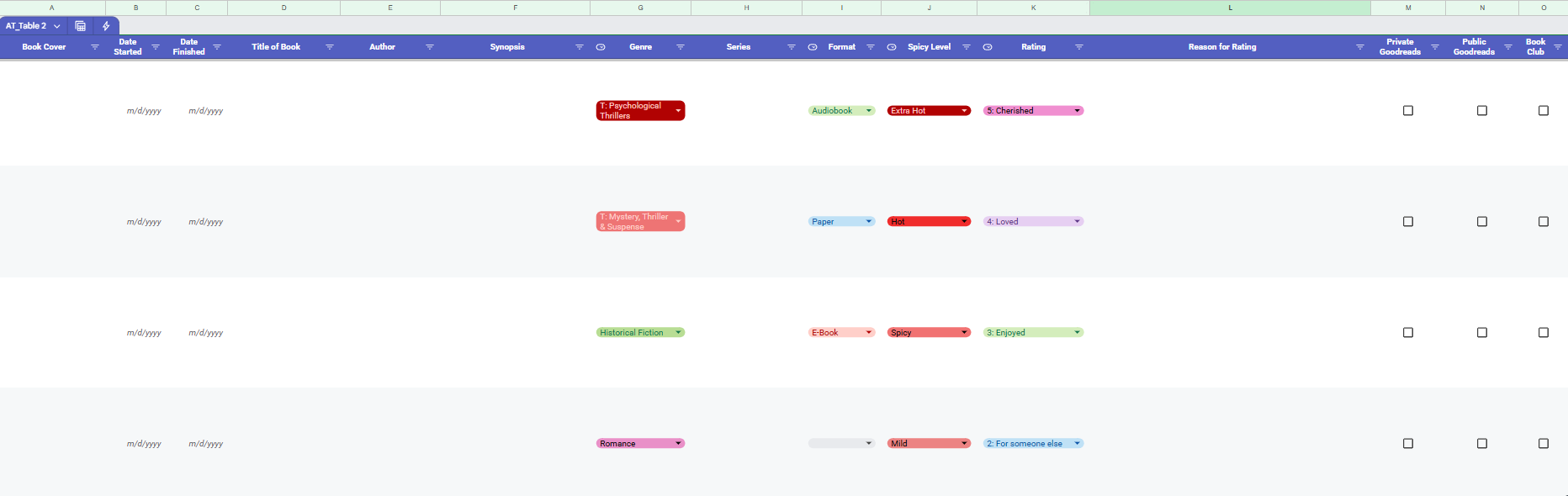
📥 Freebie Alert! Download the Book Tracking Sheet.
This link will prompt you to make your own copy in Google Drive.

Thank you for reading Beneath the Weight of Water. Paid subscriptions are optional support for future chapters, illustrations, and the long work of keeping the story alive.
Copyright © 2026 Angelica Thorne
For permission requests, contact angelicathorne@icloud.com.