

Author’s Note: Reading is not a purity test. It is a relationship between a story and a brain. If the story lands and stays with you, the method did its job.
I’m getting specific from here on out.
The internet is arguing about whether listening counts as reading. I am not. Accessibility, pleasure, and why the story living in your head matters more than how it got there.
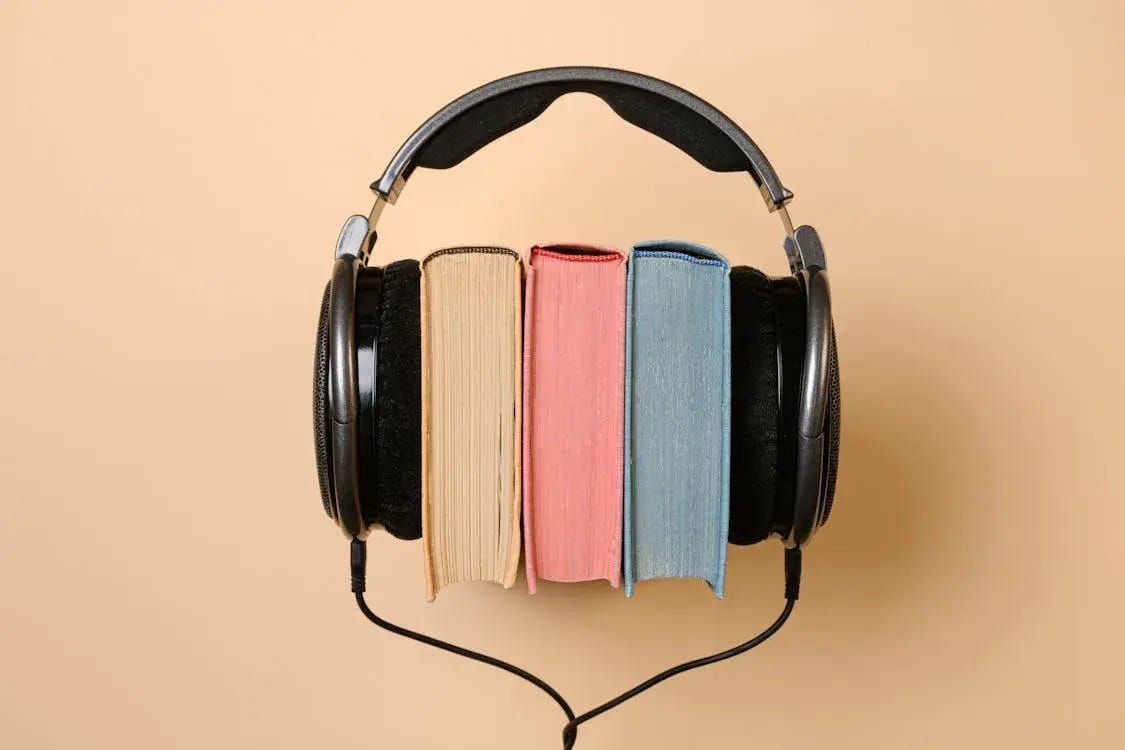
Audiobooks Count. The Format Police Can Sit Down.
Every so often, the internet remembers that audiobooks exist and decides we need another public trial over whether listening “counts” as reading.
We do this dance like clockwork. Someone posts a smug little take about audiobooks being lazy. Someone else points out disability access. Then everyone throws around words like “real readers,” as if we are guarding the gates of Alexandria with a tote bag and a Goodreads account.
The question already comes loaded. It assumes paper sits at the top of the intellectual food chain while every other format has to show identification at the door. It also pretends the debate centers on learning, when much of it comes down to status: who performs literacy in the most socially approved way.
I have limited patience for that performance.
A story gets into your head, or it doesn’t. It stays with you, or it evaporates by Thursday. That matters more than whether your eyes or ears carried it there.
What the Research Actually Covers
Research on reading retention often favors paper. Physical books give readers spatial cues. You remember where something sat on a page and control speed without fiddling with playback. Your hands take part, and that physical experience strengthens recall.
As a visual learner, I get this completely. I retain information best when I can see it, mark it, flip back, and locate it again. Paper gives my brain a map. Screens often make everything feel strangely placeless, like information floating across a window.
That research matters most in academic and professional contexts. Studying for an exam. Learning technical material. Processing dense arguments, building citations, and pulling concepts apart and putting them back together without losing your mind in the margins.
Narrative fiction works differently. Most people do not read novels so they can pass a quiz on chapter fourteen. They read for immersion, character, tension, atmosphere, and emotional residue. They read because a story can sneak under the ribs and rearrange how they breathe.
Once we pretend all reading serves the same purpose, the entire argument wobbles.
Brains Do Not All Process the Same Way
I taught for years in higher education. My field wasn’t literature, yet classrooms teach you quickly that format purity serves the system more than the student.
Some students learn best by reading. Others need to hear information. Some need to move while processing. Others need print, audio, captions, repetition, color coding, or a minor miracle involving caffeine and silence. The human brain did not come off a factory line with one approved setting.
I’m a visual learner. One of my twins processes spoken information faster and more accurately than text. The other is a kinesthetic learner. We are a neurodivergent household, so we learned long ago to stop worshipping one method like it descended from heaven wearing a cardigan.
The audiobook debate collapses the moment you account for real bodies with different brains.
Dyslexia exists. Visual impairments exist. ADHD affects attention regulation. Chronic pain and fatigue can make holding a book difficult. Some people work long hours, commute, care for children, manage illness, or live inside schedules that chew up quiet time and spit out lint.
The Idealized Reader
When someone says audiobooks don’t count, they often reveal who they imagine the default reader to be. That imagined reader feels awfully convenient.
People love dragging academic retention into this debate because it sounds serious. Fine. Bring the research. Use it where it belongs.
A student trying to master anatomy may need paper, notes, diagrams, and repetition. A lawyer reviewing a brief probably needs text. A historian working through primary sources needs precision. Nobody sensible argues all formats serve every task equally.
Pleasure Reading Is Not a Pop Quiz
Pleasure reading asks a different question: did the story land? If you listen to a novel while driving to work and still think about the characters weeks later, the story landed. If you remember the ending, the ache, the line that made you pause, the book did its job. Your ears did not somehow smuggle contraband literature into your brain.
Audiobooks also preserve performance in a way paper cannot. A skilled narrator can sharpen humor, deepen dread, and bring rhythm forward. Some books thrive aloud. Memoirs especially gain force when the author reads their own life back to you. Someone who argues voice has no literary value has apparently never experienced a good narrator emotionally attack them in traffic.
Rude of the narrator, frankly. I had errands.
Accessibility Should End the Argument
Accessibility should never require a defense this long, yet here we are, because people keep acting like comfort and access cheapen the experience.
Audiobooks allow people to read when paper creates barriers. That alone should settle the matter. A format that opens the door does not weaken literature. It brings more people inside.
The snobbery around audiobooks often hides behind concern for attention spans or intellectual seriousness. I don’t buy it. People skim paper books. Others zone out during audio. Some readers absorb every sentence. Others retain vibes, two-character names, and the emotional impact of a final chapter that ruined their afternoon.
You can experience every format deeply or use it lazily.
The real issue sits underneath the debate: some people want “reader” to remain an identity with rules attached. They want the word to signal discipline, taste, and effort performed in a recognizable way. Audio disrupts that because it lets people read while folding laundry, commuting, painting, knitting, cleaning, walking, or surviving the daily nonsense buffet.
Apparently, joy must sit upright in a chair to count.
My Real Problem With Digital Formats
I have concerns about digital reading. Those concerns lie with ownership, access, and corporate control.
When companies can alter, restrict, remove, or control access to purchased digital libraries, readers lose power. A physical book on my shelf remains mine unless a raccoon breaks in and develops literary opinions. An ebook or audiobook tied to a platform depends on terms, accounts, licenses, and whatever fresh policy nonsense arrives later.
That makes me uneasy.
I stopped buying ebooks for that reason. Digital libraries feel too much like rented ground. Convenient ground, yes. Dangerous ground too, especially for people who rely on digital formats because paper does not work for their bodies, brains, or lives.
Here’s the annoying part: I still use audiobooks. Of course I do. I knit, crochet, paint, and embroider. Audio lets me stay inside a story while my hands work. Sometimes pragmatism beats ideological purity, which is deeply inconvenient for people who enjoy sounding consistent at dinner parties.
I contain contradictions. So does everyone with a library card and bills.
What Actually Matters
A book reaches you through paper, audio, ebook, large print, braille, screen reader, or whatever tool lets the story cross over. The method matters when it affects access, comfort, retention, or ownership. It should never become a purity test.
The obsession with “real reading” wastes time. Worse, it shames people out of claiming stories that belong to them: a tired parent listening during dishes counts, dyslexic readers using audio count, commuters finishing three novels a month count, and a person with chronic pain listening from bed counts.
The story entered their minds. That is the event.
Literary gatekeeping always dresses itself up as standards. Usually, it just wants a velvet rope.
Read with your eyes. Listen with your ears. Switch formats halfway through if your life requires it. Borrow, stream, buy, annotate, replay, abandon, return. Build a reading life that actually works.
The format police can keep their clipboards. The rest of us have books to finish.
Thank you for reading.
← Mexican Gothic | Book Reviews | Mala Hierba →
Does the format matter or just the story that stays with you?
Start Here: Beneath the Weight of Water | 1980s Fiction Saga

Lucia Perez lives in a house where anger is excused, silence is expected, and survival means staying small. She keeps her head down, studies hard, and holds on to one fragile hope: that education might be her way out.
Thank you for reading Beneath the Weight of Water. Paid subscriptions are optional support for future chapters, illustrations, and the long work of keeping the story alive.
Copyright © 2026 Angelica Thorne
For permission requests, contact angelicathorne@icloud.com.