

Content note: child sexual abuse, grooming, and the long-term aftermath.
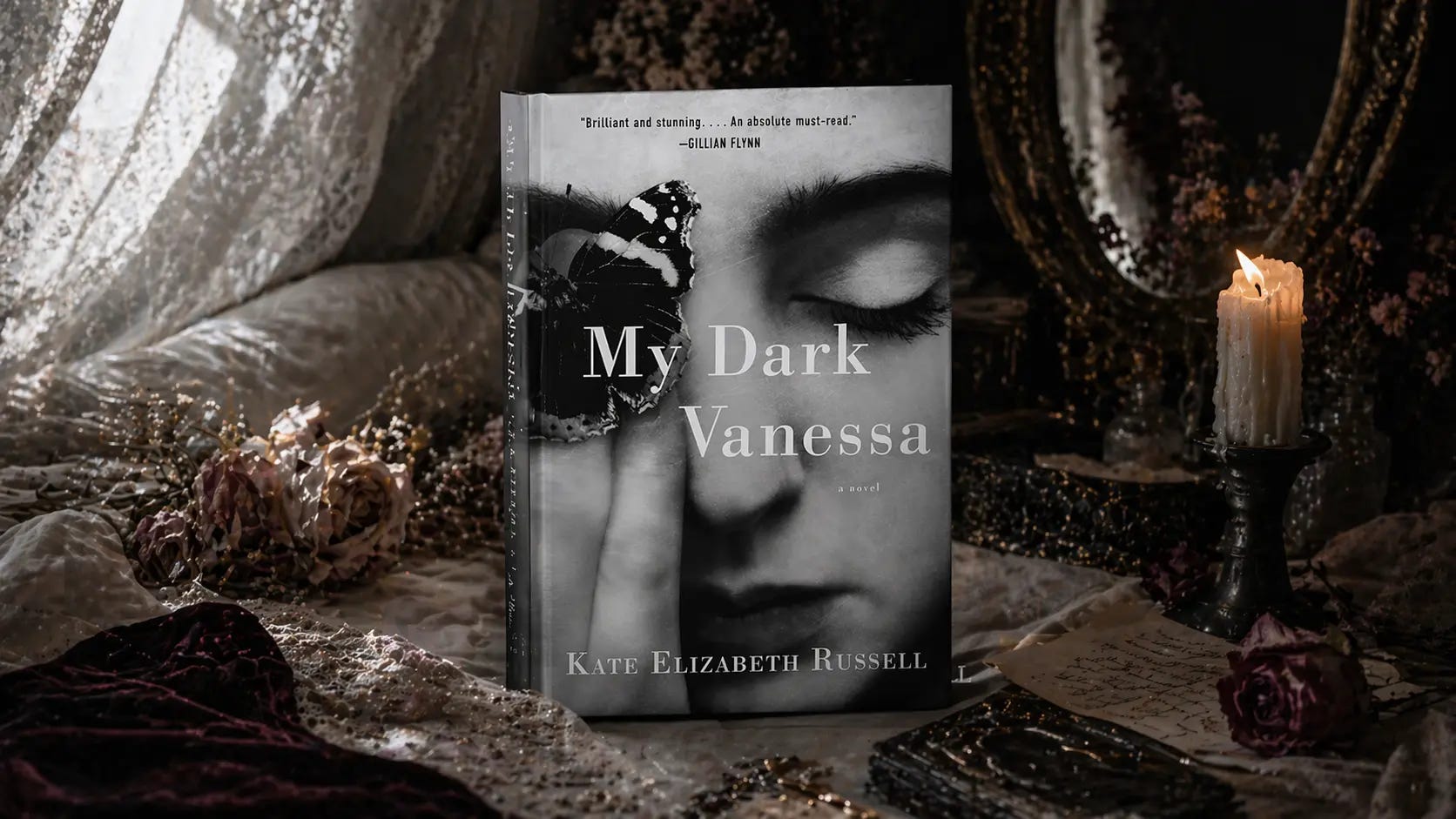
Spoilers ahead, because always.
On My Dark Vanessa and the problem of bleakness.
I finished My Dark Vanessa with my stomach tight. That’s not a literary critique, but a physical response. It’s the kind of feeling that tells you a book has struck something real. It raises the question: what do readers want from survivor stories?
Not what we should want or what sounds virtuous in a book club discussion. What do we actually want when we sit down with a story that drags abuse into the open and refuses to look away?
The book is honest. The problem sits someplace else.
The novel moves between Vanessa as a teenager and Vanessa as an adult. You see the beginning and the aftermath at the same time. That matters because grooming is never just a past event. The abuse ends, but the story the abuser installs keeps running.
Russell nails that.
Vanessa is not naïve in the way people like to accuse victims of being naïve. She’s a lonely teenage girl who wants to be wanted and is eager for adult approval.
Predators recognize vulnerability from a mile away. So unsurprisingly, Strane gives her a story: You’re special. You’re not like the others. This is love. You chose it.
Vanessa holds onto the story because the alternative is unbearable. It means admitting her body and her mind were not hers in the way she needed them to be.
The book also refuses the “perfect victim” performance. Vanessa doesn’t turn into a clear-eyed advocate with a clean arc. She doesn’t become righteous, inspirational, or even an ally of other victims. Instead, she’s defensive, angry, and unreliable. She protects him.
That part of the book is brutal. It’s also accurate.
Some people never get the triumphant version of survival. People stay stuck. Others only begin to name what happened decades later. For others, it never gets named at all.
Russell understands that and writes it without apology. That’s why the book works.
It’s also why the ending hit me like a wall.
The ending withholds oxygen.
Here’s what I mean by bleak. I don’t need rescue stories, but I need a door.
I’m a survivor of child abuse.
I’ve done years of therapy. Some things changed while others didn’t. Trauma still informs my reactions. Anxiety still lives in my body. Certain memories still hurt to touch, even during safe moments in a good life.
And yet, my life did not end at trauma.
I didn’t get a fairy-tale ending. What I built instead was harder and more honest. It’s a life I shaped myself, one where the abuse is part of the past but not the definition of who I am. The scars are still there. They just don’t get to tell the whole story.
So what did I want?
I wasn’t looking for a transformation montage, a victory speech, or even closure when I read My Dark Vanessa.
What I needed was a door. Not because I can’t tolerate darkness. I just refuse the idea that darkness is the ending in survivor narratives.
Trauma can shape a life without defining it. So I wanted something that said: what happened is not the only thing that will ever happen.
The book doesn’t give that. It gives realism in a way that feels like foreclosure. Vanessa’s trauma wasn’t integrated into her life. It seemed fused to it.
A survivor story can be honest without trapping the character in eternal ruin. A story can say, “This happened,” without implying, “This is all that will ever be.”
That’s the line I struggled with here.
Hope can live in honesty.
My Dark Vanessa gives the ugly truth of abuse in full view.
The book did what it set out to do. It just left me needing to breathe.
Survivor stories owe me honesty but don’t owe me hope.
The real answer is that I’m allowed to want it anyway. I suspect other survivors do too.
The shelf test. I gave it a 4 out of 5.
I loved it but can’t cherish it. The story isn’t weak. It’s heavy in a way that doesn’t let up. I would never want to step into Vanessa’s world again.
Book Details
Title: My Dark Vanessa
Author: Kate Elizabeth Russell
Published: March 10, 2020
Genre: Literary Fiction, Psychological Fiction, Contemporary Fiction
Thank you for reading.
← Mexican Gothic | Book Reviews | Big Chicas Don’t Cry →
Does honesty need to leave room for hope?
Start Here: Beneath the Weight of Water | 1980s Fiction Saga

Lucia Perez lives in a house where anger is excused, silence is expected, and survival means staying small. She keeps her head down, studies hard, and holds on to one fragile hope: that education might be her way out.
Thank you for reading Beneath the Weight of Water. Paid subscriptions are optional support for future chapters, illustrations, and the long work of keeping the story alive.
Copyright © 2026 Angelica Thorne
For permission requests, contact angelicathorne@icloud.com.