
The False Peak on the Page
A first draft feels like victory until revisions reveal the real mountain waiting behind it, fake mustache and all.

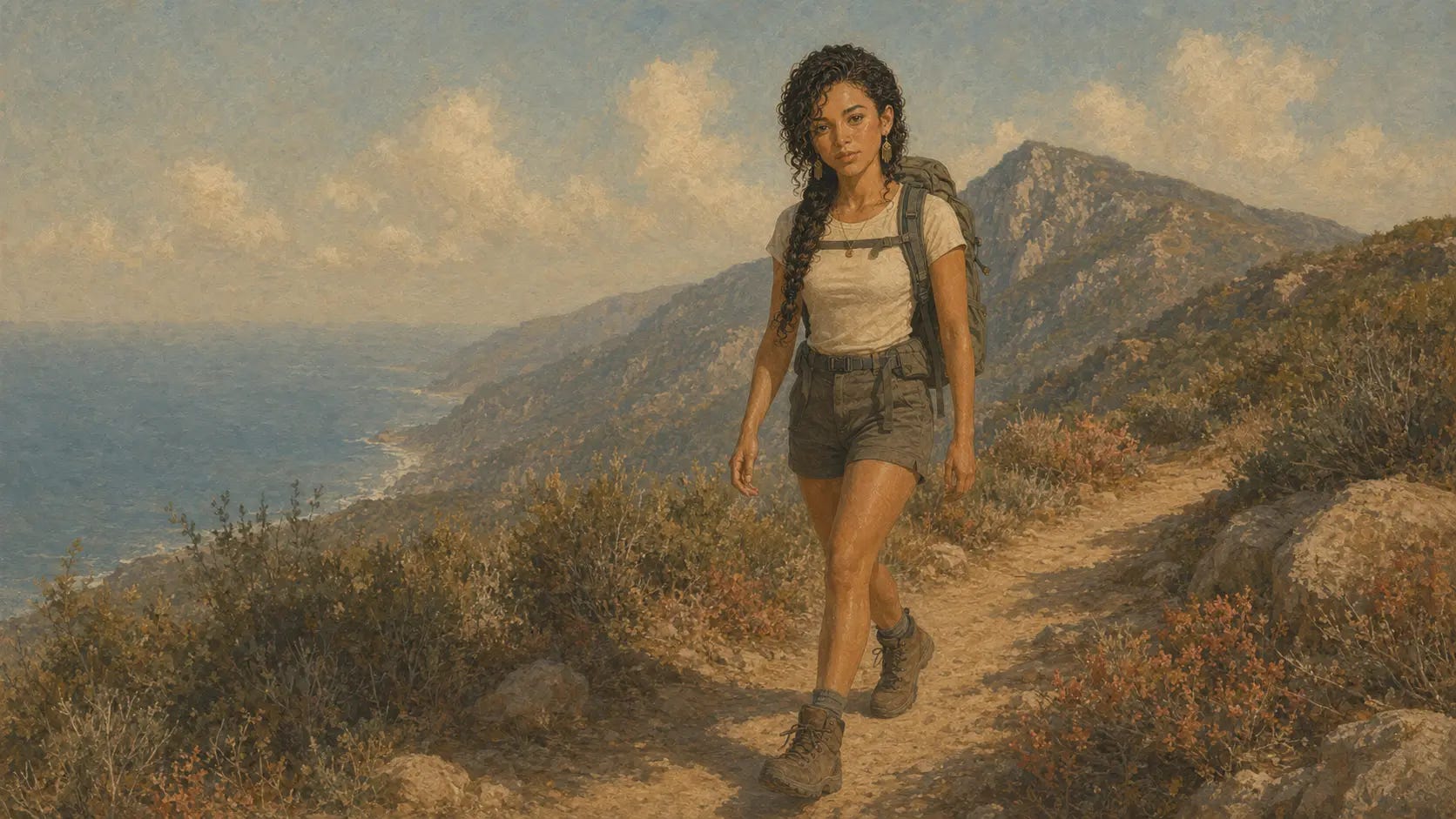
Revision begins when you stop admiring the pile and start listening for what struggles underneath it.
A first draft feels like a summit until the real mountain steps out from behind it, rude as a tax bill.
Oh, that sweet moment when my fingers finally stop clicking across the keyboard. My screen goes still while the cursor blinks. Somewhere inside my exhausted little soul, a choir warms up.
Naturally, the choir lies.
I have always had a talent for miscalculating distances. This talent has served me poorly in writing, hiking, and believing I can open a bag of chips “just to check the flavor.” One afternoon in San Diego taught me this with the subtlety of a shovel to the ribs.
An Easy Trail
The trail looked manageable at first, which is how trails lure respectable adults into becoming sweaty accusations against nature. Sun-baked gravel slid beneath my hiking boots. I narrowed my focus to the patch of earth ahead of my toes because looking up felt like inviting despair into my home and offering it coffee.
The incline demanded that smallness. Dirt. Rock. Boot. Breath. Repeat. Somewhere above me, a sharp ridgeline cut against the sky. I decided, with the confidence of a fool who had learned nothing from living, that the ridge marked the top. No informed conclusion guided this choice. This was a hostage negotiation between my body and my imagination.
Still, the belief helped. Each burning step moved me closer to the blessed flat place where my legs would stop filing complaints with management. I pictured myself reaching the crest like a woman in an outdoor gear commercial, wind in my hair, soul purified, absolutely no evidence of wheezing.
A Convenient Lie
Reality, having a cruel sense of timing, waited. I dragged myself onto the ridge and stood there gasping. Then I looked up.
The ridge was barely a shoulder. A geological prank. Across the valley, the actual mountain rose, huge and jagged, completely untouched by my suffering. The real peak stood before me with the cold indifference of an unpaid bill.
I wanted to sit in the dirt, kick like a toddler on a sugar high, and yell at the horizon. This felt reasonable. The horizon had behaved badly.
My imagination had built a convenient finish line, and the mountain had refused to honor my delusion. Inside my chest, the lungs had already written a resignation letter. Yet the landscape did not care about my private agreement with gravity.
The real insult? The hill did not lie to me. I lied to myself, then got offended when reality declined to participate.

Beware of the Mustache
Typing the final period of a first draft delivers that exact brand of humiliation, though usually with fewer rocks in your socks. The word count glows on the screen. The file exists. For months, the book lived as vapor, panic, coffee, and several conversations with yourself that would alarm a passing neighbor.
The hands fall away from the keyboard. Shoulders lower as you look at the manuscript and think, I did it.
A moment of silence for that poor idiot. In other words, me!
The first draft feels like the summit because the climb was real. You pulled the raw material out of your mind one stubborn sentence at a time and survived the middle, where many manuscripts die and become decorative guilt in a folder named “New Draft Final Actual Final 3.”
I respect the first draft, but also know it arrives wearing a fake mustache and calling itself a book.
The illusion lasts until you print the pages or open the file the next morning. Fresh eyes are rude little creatures. They see everything: the chapter that wanders around with no wallet, the scene that explains itself twice, and the paragraph you loved at midnight because exhaustion had temporarily removed your standards. The manuscript stops looking like a finished book. It looks like raw material with ambition.
A first draft gives you the minimum physical evidence that a book might exist. Pages sit on the desk. Chapters have names. Characters move through scenes with varying degrees of competence. Somewhere in there, a story breathes. Unfortunately, it breathes like someone trapped under a pile of dirty laundry.
Revision begins when you stop admiring the pile and start listening for what struggles underneath it.
The Actual Climb: The Revisions
That is where the real mountain begins.
The first climb asked for momentum. Revision asks for judgment, restraint, patience, and the emotional maturity to murder a paragraph you once considered your precious little genius baby. No one tells you how often writing requires infanticide via the delete key. They should put that on mugs.
You cannot revise everything at once, no matter how convincing the panic sounds. A manuscript under revision becomes a collapsing house if you run from room to room with a hammer, fixing every crack while the foundation shifts beneath your feet. I have stood in the ruins holding a comma and wondering why the roof disappeared.
The work needs separation.
First comes the structural pass. You examine the whole creature. Does the story have a spine? Tracking whether the plot carries weight becomes an immediate necessity. Do the characters change through pressure, or do they merely decorate the furniture with interesting trauma? This pass requires honesty, which is deeply inconvenient. It asks you to admit when a beautiful scene has no function beyond proving you can write a beautiful scene.
Terrible news for those of us who enjoy our own sentences a little too much.
After that comes the chapter pass. Each chapter must move. It needs tension, consequence, and a turn that shifts the reader’s footing. A chapter cannot simply enter the room, announce a mood, and faint on the carpet. It must alter something.
Then comes the line edit, where vanity goes to receive medical treatment without anesthesia.
The line edit does not care that you were tired. It asks one question again and again: does this belong? Flat rhythm. Lazy verbs. Repeated gestures. Defensive explanation. Sentences that point at the emotion because they do not trust the scene to carry it. All of them crawl out during the line edit like roaches when you turn on the light.
Charming.
The final pass asks for the cruelest adjustment. You remove the handrails. No more stepping between the character and the consequence. You let the scene breathe without standing nearby in a reflective vest, directing traffic.
Explanation feels safe. It lets me believe I have controlled the reader’s experience. Yet control can flatten the thing I worked so hard to make alive.
So I cut the extra guidance. I leave more air around the wound. The ending of a section destabilizes the reader instead of tucking them into bed with a warm lesson and a mint on the pillow.
Life rarely offers that kind of service anyway.
Fooled Again
The false peak still fools me. I still reach the end of a draft and feel that dangerous little spark of triumph. For a moment, I let myself enjoy it. I stand on the low ridge, sweaty and smug, admiring the view like a woman who has learned absolutely nothing.
Then the real mountain appears.
Every time, I hate it.
Then I start walking.
Thank you for reading.
What part of the writing process keeps tricking you into thinking you’re almost done?
← A Fantasy That Bleeds | Table of Contents | Next Essay on 7/6/26 →
If you like writing essays about craft, revision, and the deeply offensive behavior of first drafts, subscribe for more.
Copyright © 2026 Angelica Thorne
For permission requests, contact angelicathorne@icloud.com.