

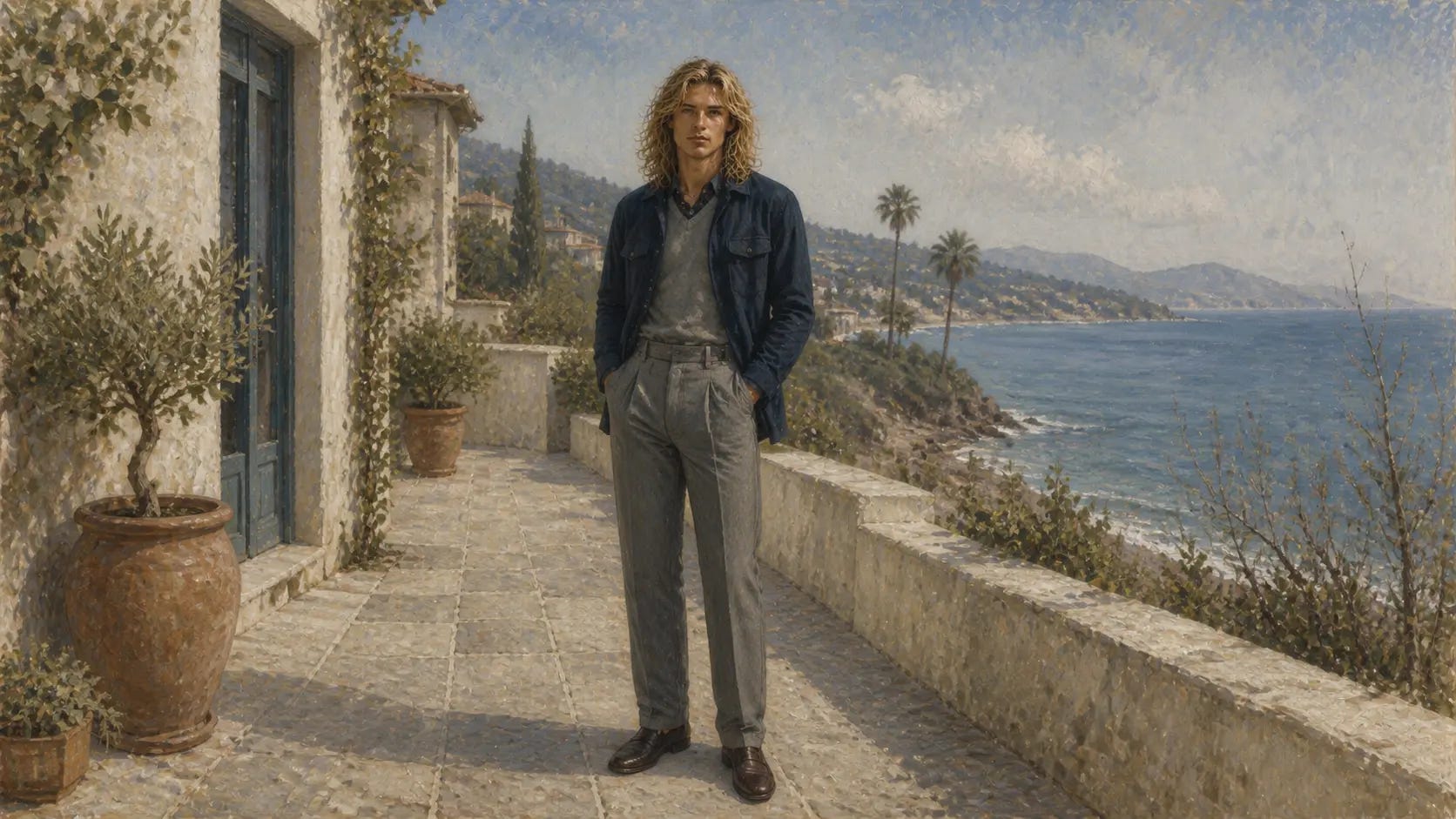
I will miss the shine when the story takes it away.
I wanted to write a young man trained to look effortless, committing to love before he understood that growth would cost him his shine.
The Call
Lucia calls him the way people call 911. Her hands sweat as she tries to hold on to the receiver. Her voice begins steady, then slips. The house is loud with older women making excuses for a man who never deserved them.
Matteo arrives in twenty minutes because his promise has already put him in motion. His sports car looks wrong on a Shelltown street. He waits with practiced patience, afraid one wrong move will betray the frailty inside the performance.
When she slides into the passenger seat, he does not focus on her bruises. Fingers flex against the leather-wrapped wheel and stop. He takes a breath and loses the next one on the way out. He focuses on the road because he can’t trust himself to look at her face.
His introduction offers him up as a prince. The halo forms before he opens his mouth, and I catch myself keeping the light off the cost.
The Shine
Nothing about him is accidental. Even his warmth arrives with a purpose. Mallorca taught him that a room can be a trap. There, he learns to keep his grandparents pleased before anyone has to remind him what depends on it. His smile becomes the safest answer in any room. San Diego taught him to look easy until charm seemed to move through him on its own. Those two versions come together seamlessly, keeping his training hidden.
A polite smile appears on schedule. His tone shifts to meet the needs of the room. He offers space so smoothly that sophistication becomes the cover story, with safety hidden in every gesture.
Illness does not break his training. It sharpens it. A body that can betray you forces you to control what you can. He hides fatigue and projects the radiance the room demands. The reader mistakes his armor for confidence.
I have to remind myself that while filial duty outwardly propels him, the truth beneath it is that every action is a desperate attempt to maintain the little agency he still has. Some days when I start to write, like the reader, I mistake the armor for him.
The Engine
Under the surface, his motives are structural. Chronic illness is the silent thief that keeps stealing his choices, and family makes him property.
Safety, for him, becomes something he manages. He maps and controls risk at every step. A choice can become a transaction he cannot afford. Peace remains out of reach, and containment becomes the structure that holds him together.
Then he makes a mistake. An overlooked girl does not feel dangerous to a young man trained to recognize a threat only when it arrives with money, bloodline, or obligation. He now needs her to want him, which grants her a power that defies calculation.
The Stress Test
Helplessness sits behind his ribs like a stone. He recognizes it from hospital rooms, from adults who spoke softly and still failed him. That recognition is where the romance turns sharp. Tenderness stays long enough for panic to find a place inside it.
Promises have failed him too many times. He gives her an ice pack before empty words can leave his mouth. The drive stretches on because the road asks less of them than speech. Later, beneath a streetlamp, he lets the salt air do what certainty cannot.
Saving her is beyond his reach. His refusal to look away becomes its own kind of pressure. Love finds the seams.
Making It Legible
Here is the craft problem I keep tripping over. The forces that shape him do their work beneath the surface. His fear of losing agency stays invisible until the page makes him act it out.
Control reads like calm unless it has a body. His warmth looks natural until the reader catches the calculation behind it.
In the first act, the outside view lets his polish hold. His words arrive smooth enough for Lucia to trust the surface. His touch arrives at the right moment because Lucia experiences timing as safety. A Prince Charming aesthetic organizes how Lucia sees him.
I have to wait long enough for the cost to disturb it.
Method
The first crack is invisible to Matteo. Lucia fights her attraction to him. She keeps reaching for a quieter kind of safety, the kind that can survive an awkward room. The fantasy has to crack in front of her, exposing the person underneath the armor.
One crack leads to another. An ugly reflex belongs to him. Jealousy flashes across his face before he can control it. Shame follows. A family dinner sends him to the bathroom, where he grips the sink and breathes around a flare he refuses to name. A conversation with his grandfather turns into a headache the moment the door shuts.
Charm arrives when optics have to win. He smooths over a moment he should confront, then hates himself for the silence. The dynasty taught him that confrontation carries a bill, and he knows he is the one being charged.
Perfection leaves residue. If I keep the cost inside his head, he reads like a pose. Shine needs a receipt.

Return
I still want the shine. Lucia needs it.
A man who shows up when you call is a seduction. His steadiness feels like a miracle if you grew up learning love had sharp edges.
The fantasy has a reason to exist. Loving her becomes the first crack; family pressure sends it traveling through places he thought would hold.
He chooses what looks best from inside the impossible position he helped create. Failure arrives carrying proof that he has finally acted. He is learning that growth drags dirt into every room.
I am learning how to write that without turning him into a warning label.
I will miss the shine when the story takes it away.
Thank you for reading Beneath the Weight of Water. Paid subscriptions are optional support for future chapters, illustrations, and the long work of keeping the story alive.
Did Matteo’s shine make you trust him, or worry for him?
Next Chapter
The False Peak on the Page

Revision begins when you stop admiring the pile and start listening for what struggles underneath it.
Previous Chapter

Start from the Beginning
If you like writing essays about craft, revision, and the deeply offensive behavior of first drafts, subscribe for more.
Copyright © 2026 Angelica Thorne
For permission requests, contact angelicathorne@icloud.com.